Module 01, the job
How a heist plays
A heist is one job on one station, from picking the contract to getting out with the loot. It takes 20 to 40 minutes, depending on the station and how loud the crew gets.
The contract
The crew picks a job from the board on their ship. Each job names a station, a target such as a vault or a data core, and a security level. Harder jobs pay more.
The scout
The crew docks somewhere quiet and looks over the station from outside. They watch guard routes through the windows and mark hatches and vents for everyone to see.
The way in
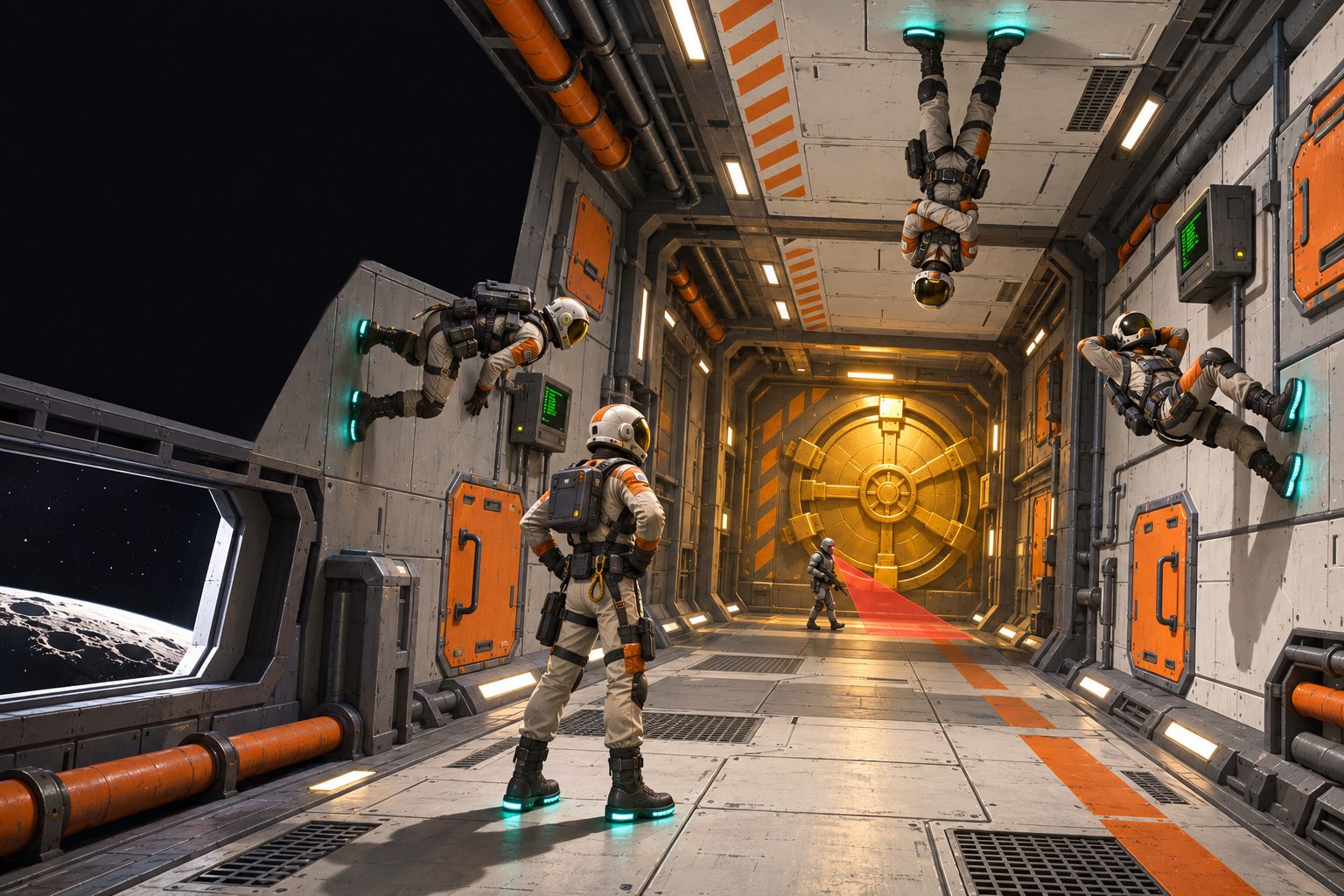
Each player chooses their own route: through a ceiling vent, along the outside of the hull, or through a cargo bay. Guards and cameras watch the floor, so walls and ceilings are the safest place to be.
The job
Reaching the target usually takes several players at once. One holds a door from the ceiling while another cracks the vault from below, or one cuts the power while another carries the loot through the dark.
The getaway
Loot is heavy and pulls on its carrier's gravity, so it slows them down. The crew gets it back to the ship either quietly the way they came, or loudly through whatever is in the way.
Back on the ship
The crew splits the pay, spends it on gear and the ship, and picks the next job. A job that went loud raises security on the next station in the same sector.
Being spotted does not end the heist. The station goes on alert, more guards arrive and doors seal, but the crew can still fight its way out or hide until the alert drops.
Module 02, the stories
Signature moments
Every player sees the room from a different angle, so the crew wins by describing what they see to each other. These are the moments friends will talk about afterwards.
The ceiling lookout
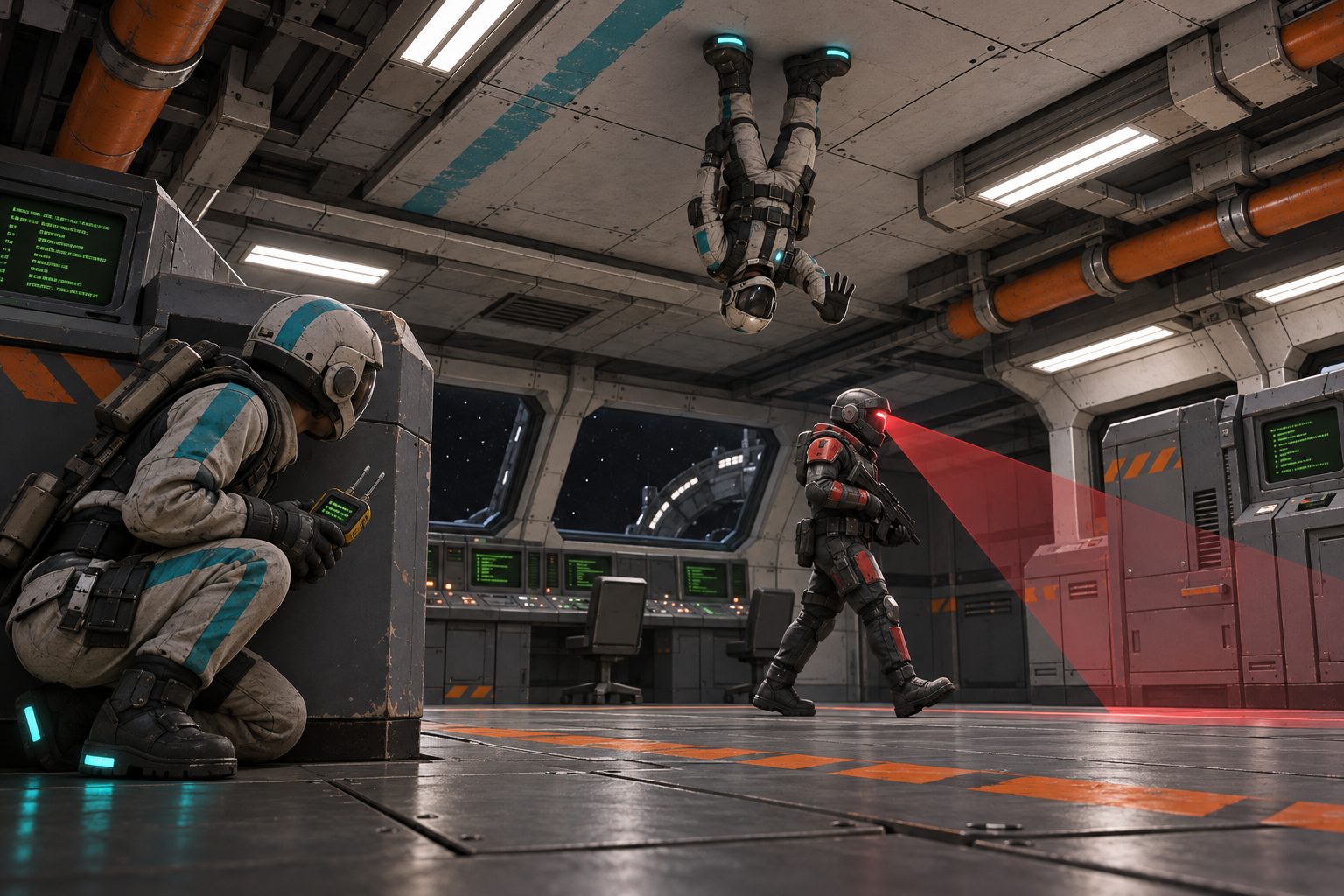
One player hangs upside down from the ceiling while a guard walks directly underneath. They watch the guard's sight cone and call the moment for the player below to pick the lock.
Everyone else on voice chat holds their breath until the guard has gone.
The hull crawl
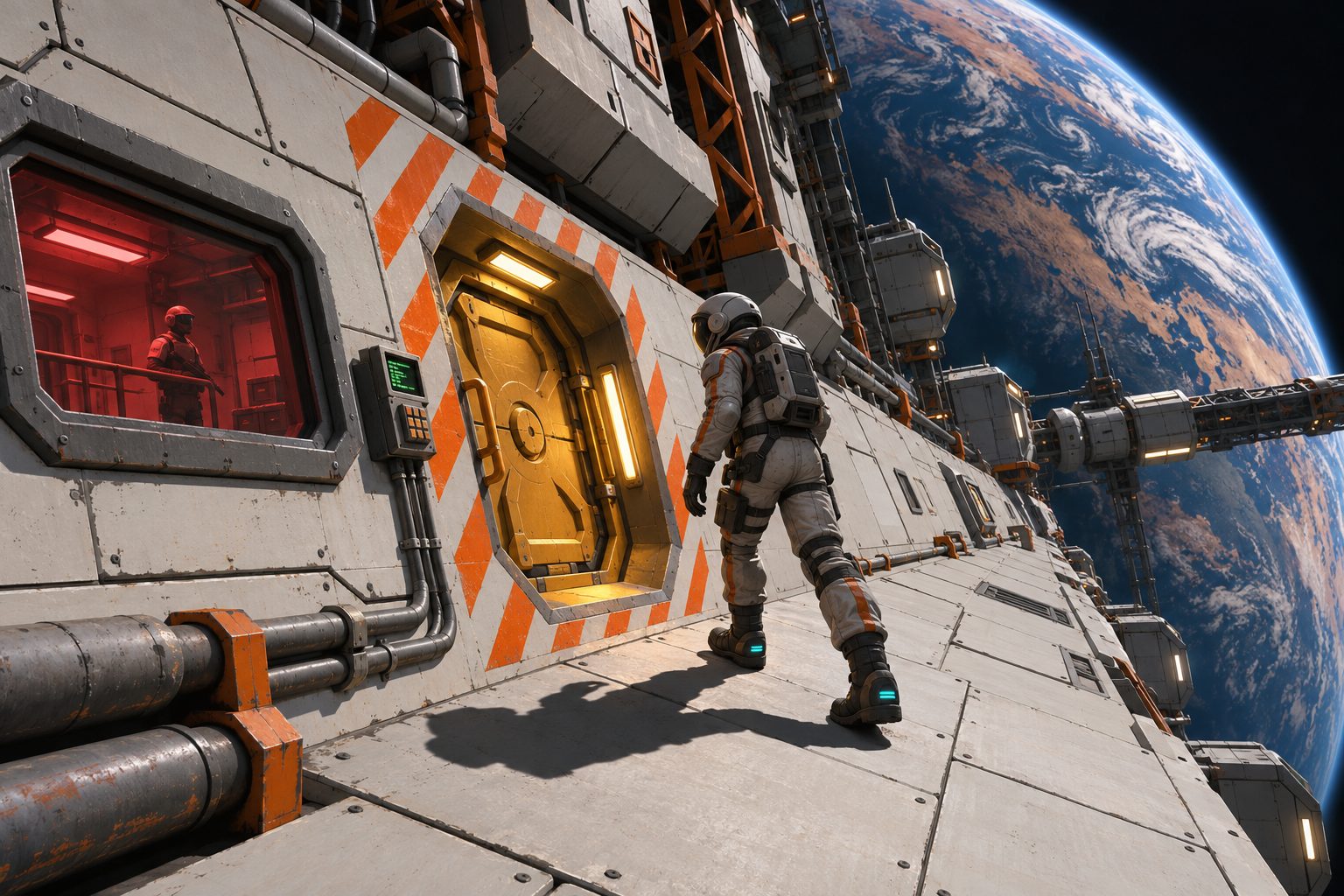
While the others keep the guards busy inside, one player walks along the outer hull to reach the vault from below. Out here there is no air, so they talk over suit radio and watch their air supply.
When everything goes wrong, the crew can blow a hull panel and leave through space together.
Module 03, the opposition
Security and what goes wrong
Station security is built for people who walk on floors, and the crew's job is to stay where it isn't looking. Each station mixes a few of these threats, and harder jobs add more of them.
Floor guards
Guards patrol the floors and only look ahead and slightly up. A guard who sees a player calls an alert after a short delay.
Counter: move along the walls and ceilings above their line of sight, or take them down quietly from above.
Cameras
Cameras sweep rooms at floor height. A player who stays in view for too long sets off an alert.
Counter: pass behind them on the ceiling, cut their power, or loop the feed from a security room.
Gravity lock rooms
Some rooms force one direction of gravity on everyone inside, so the crew loses its advantage.
Counter: plan around them, or send one player to switch the lock off from a control panel elsewhere.
Hull sensors
Parts of the outer hull detect anyone who walks on them.
Counter: cross those parts quickly, or cut the sensor grid from inside first.
Heavy loot
Carrying loot slows a player down and limits them to one gravity change before they land.
Counter: pass the loot between players, or send it along a cargo rail while others clear the way.
Alert
Doors seal and more guards arrive. Some of them wear magnetic boots, so they can follow the crew onto the walls.
Counter: fight from angles they can't cover, hide until the alert drops, or blow a hull panel and leave.
Running out of air
Outside the station, each suit has a limited supply of air.
Counter: keep trips outside short, and refill at airlocks or from a crewmate's spare tank.
The biggest decision on every job is how loud to go. A quiet job pays a bonus and keeps the next station calm. A loud job is faster, but it makes the rest of the sector harder.
Module 04, the interface
The in-game screen
There is no radar and almost no floating interface. What a player needs to know is shown on their suit, on their wrist, and in the world itself.
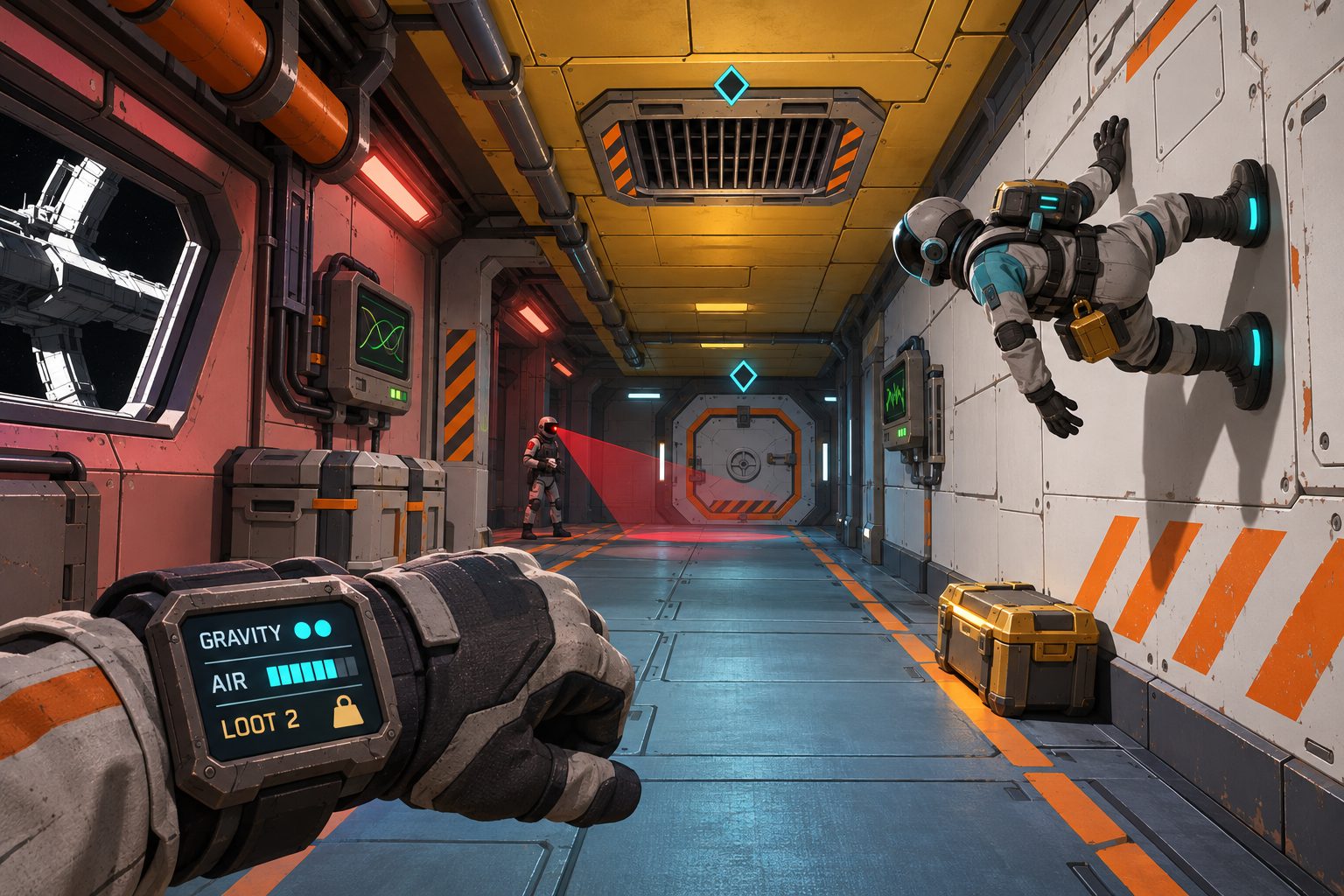
Gravity charges show as lights on the wrist. A player has two, and they refill on landing.
Air and loot weight also sit on the wrist, so players look down at their own arm to check them.
Scout marks float in the world where the crew placed them, over vents, hatches and guard routes.
Security glows red. Cameras, sensor lines and guard sight cones are red, so players can plan around them without a map.
Every surface is coloured by the direction it faces, so a player can say "I'm on the blue wall above the door" and be understood at once.
Module 05, the look
Art direction
The stations look like working industrial spaces from older science fiction: chunky panels, painted warning stripes, exposed pipes and small screens with green text. The look is clean and readable, because players need to judge every surface at a glance.
#0A0C10Space, deep shadows and menu backgrounds.
#D9DCD6The outer hull and clean station panels.
#6B7178Interior walls, floors and machinery.
#F26B1DWarning stripes, hatches and things the crew can use.
#E03A3ECameras, sensors, guard sight and alerts.
#3FC1C9Crew marks, boot lights and friendly interface.
#E8B84ALoot and the heist target.
- DoKeep the direction colours from walls-are-floors on every surface, so players can call out walls by colour.
- DoGive every crew member cyan boot lights and a short trail when they fall, so everyone can see which way is down for each friend.
- DoMake anything that belongs to security glow red, and use red for nothing else.
- Don'tAdd a minimap or radar. Players should read the room, not a map.
- Don'tUse heavy textures or busy detail. Simple shapes with strong, flat lighting keep surfaces easy to judge.
- Don'tUse real brand logos or copy characters from other games. Every station, suit and logo is original.
Outside the station, the hull is lit hard by a nearby planet or star, with very dark shadows. Stepping outside should feel quiet and exposed after the busy interior. The six direction colours come from the existing walls-are-floors palette and are not repeated here.
Module 06, the crew's future
Progression
Pay from each heist goes into the crew's gear and their ship, and each finished sector opens a harder one.
Gear
New tools change how players move and solve problems: a cable launcher for crossing gaps, a third gravity charge, quieter boots, a scanner that shows guards through walls, and a portable gravity lock that pins guards to the floor.
Weapons
Quiet weapons for clean jobs, and loud ones for when everything goes wrong. They start from the walls-are-floors weapons, adjusted for co-op against computer guards.
The ship
The crew's ship is their base between jobs. Upgrades add a better scout drone, a faster docking clamp for quicker getaways, and a workshop for changing gear.
Sectors
Stations are grouped into sectors, and each sector ends with a large heist that uses everything the crew has learned. Finishing a sector unlocks the next, with new security and stranger layouts.
Heat
Loud jobs raise security across the current sector. This makes the choice between quiet and loud matter beyond a single heist.
Everything is earned by playing. There are no in-game purchases.
Module 07, the store page
Steam store direction
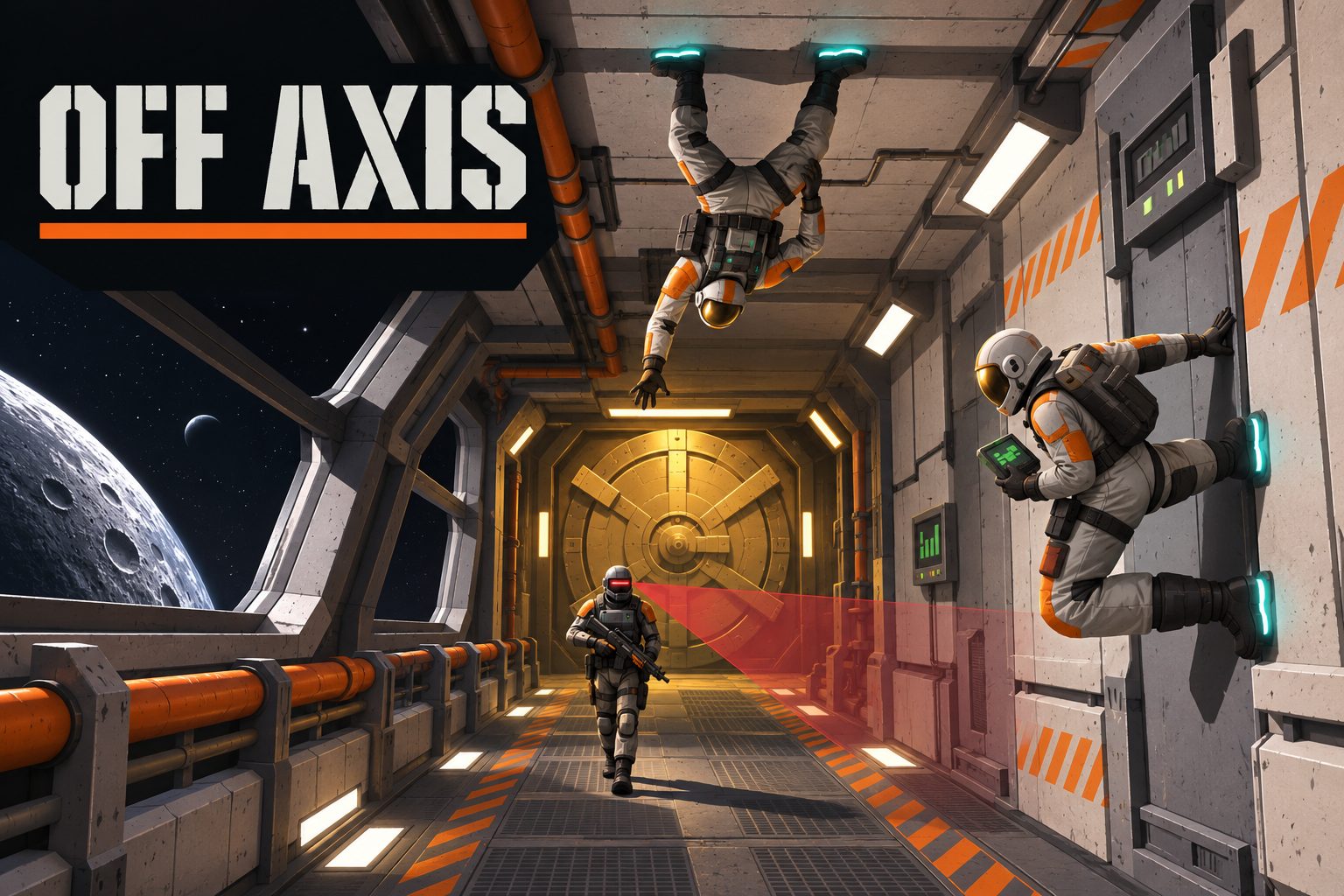
The store capsule needs to show the idea in one look: people standing on different surfaces, and a guard who hasn't noticed them.
- One fixed price, no in-game purchases. The price should be low enough that a whole friend group will buy it together.
- Store page early. Put the page up as soon as there is footage that shows the gravity clearly, so the game starts collecting wishlists.
- A free demo with two short heists for a Steam Next Fest. The first heist teaches gravity in a safe room before any guards appear.
- Clips that look impossible, such as a player walking up a wall and across the ceiling past a guard, are the ones people will share.