Leak
The hull springs a leak and water starts filling the hold.
The fixOne player patches it from inside while another runs the bilge pump.
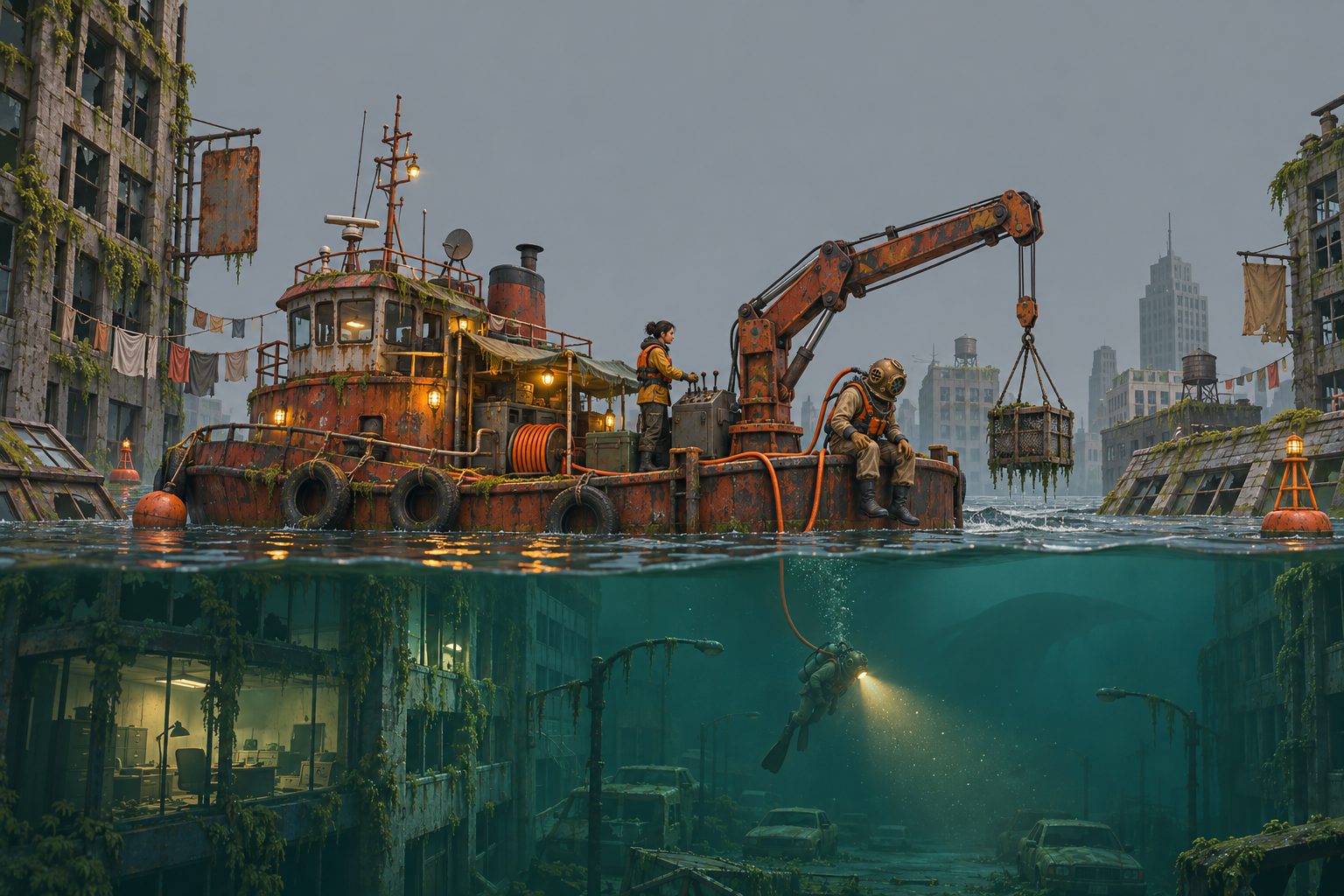
Nobody can bring the good loot home alone.
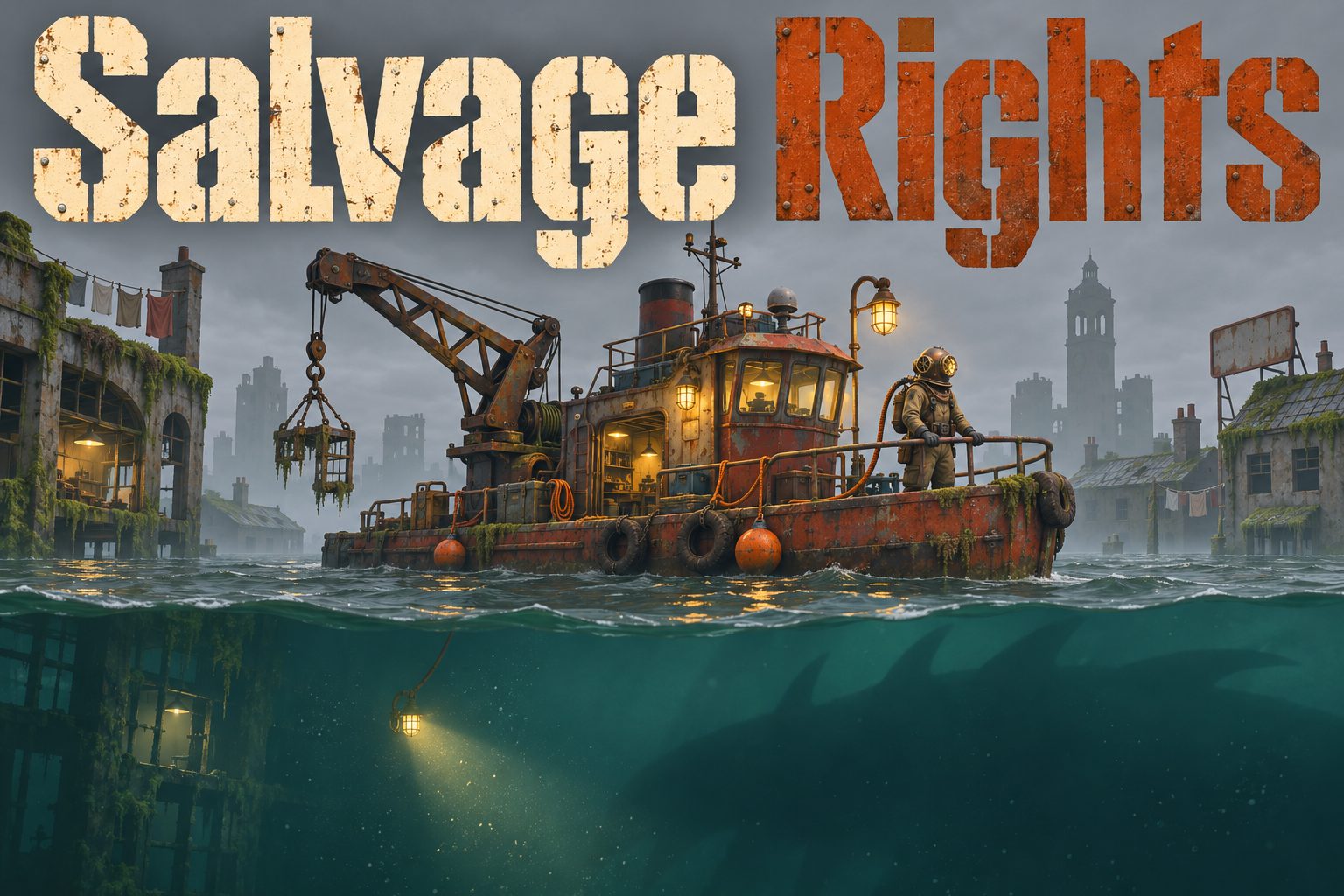
Salvage Rights is a co-op game about a crew that runs a battered tugboat in a city that flooded twenty years ago. On each trip, the crew motors out to a sunken district, dives into drowned buildings and hauls up anything worth selling. Storms roll in, the boat takes on water, and something large lives in the deeper streets.
2 metres: the harbor
A trip is one outing from the harbor to a sunken district and back. It takes about 30 to 45 minutes, depending on how far out the crew goes and how greedy they get.
The crew picks a district from the chart table, which shows its depth, its known wrecks and its weather. They buy fuel, air tanks and repair patches, and choose which salvage jobs to take from the board.
The tug motors through drowned streets between rooftops and half-sunk towers. Whoever is steering reads the sonar and the paper chart while the rest of the crew gets the gear ready on deck.
The crew picks a spot above a wreck and drops anchor. A good spot is close to the loot and sheltered from the wind. A bad one leaves the boat swinging into a building when the current turns.
Divers go down with a lamp, a cutting torch and a set amount of air. They search flooded offices, shops and flats, cut loose anything valuable and clip it to the crane line. The crane operator hauls it up and stows it so the boat stays balanced.
Most trips bring two or three problems, such as a leak, a storm, a collapsing floor, or the thing in the deep streets coming closer. The longer the crew stays, the worse it gets.
A loaded tug sits low in the water and handles badly, so the trip back is often the hardest part. The crew can dump cargo to stay afloat.
Back at the harbor, the crew sells the salvage, pays for repairs and spends the rest on the boat.
If the tug sinks, the crew loses its cargo and has to pay for a tow and repairs. Nobody loses the boat for good, but one bad trip can set the crew back by several trips.
6 metres: on deck and below
The game is about teamwork on a small, fragile boat. One player steers, one runs the crane, and the others dive with limited air. These are the moments friends are most likely to talk about afterwards.
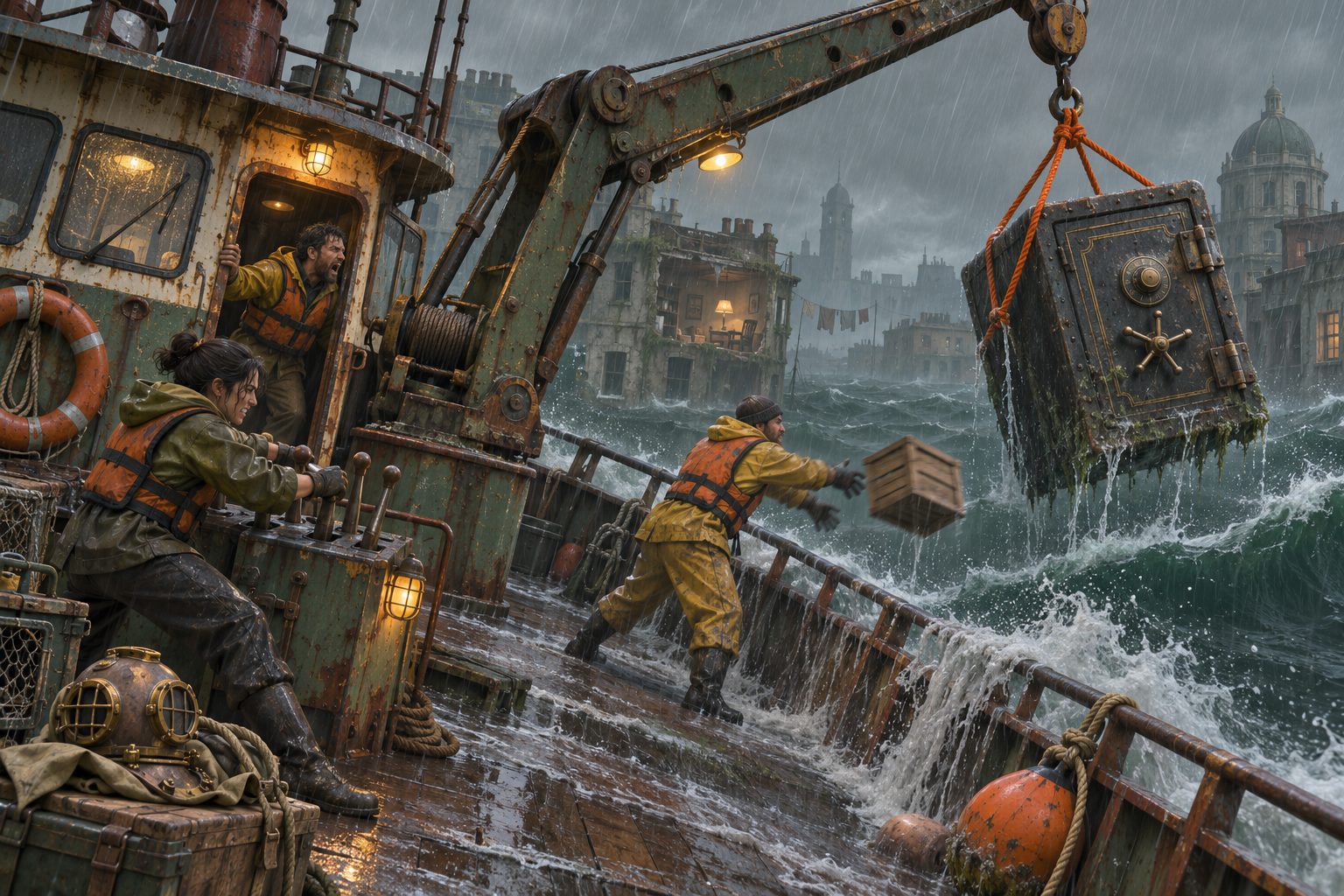
The crane is halfway through hauling up a heavy safe when the storm hits and the tug starts to tip. One player fights the crane while another throws cheaper cargo overboard to keep the boat level.
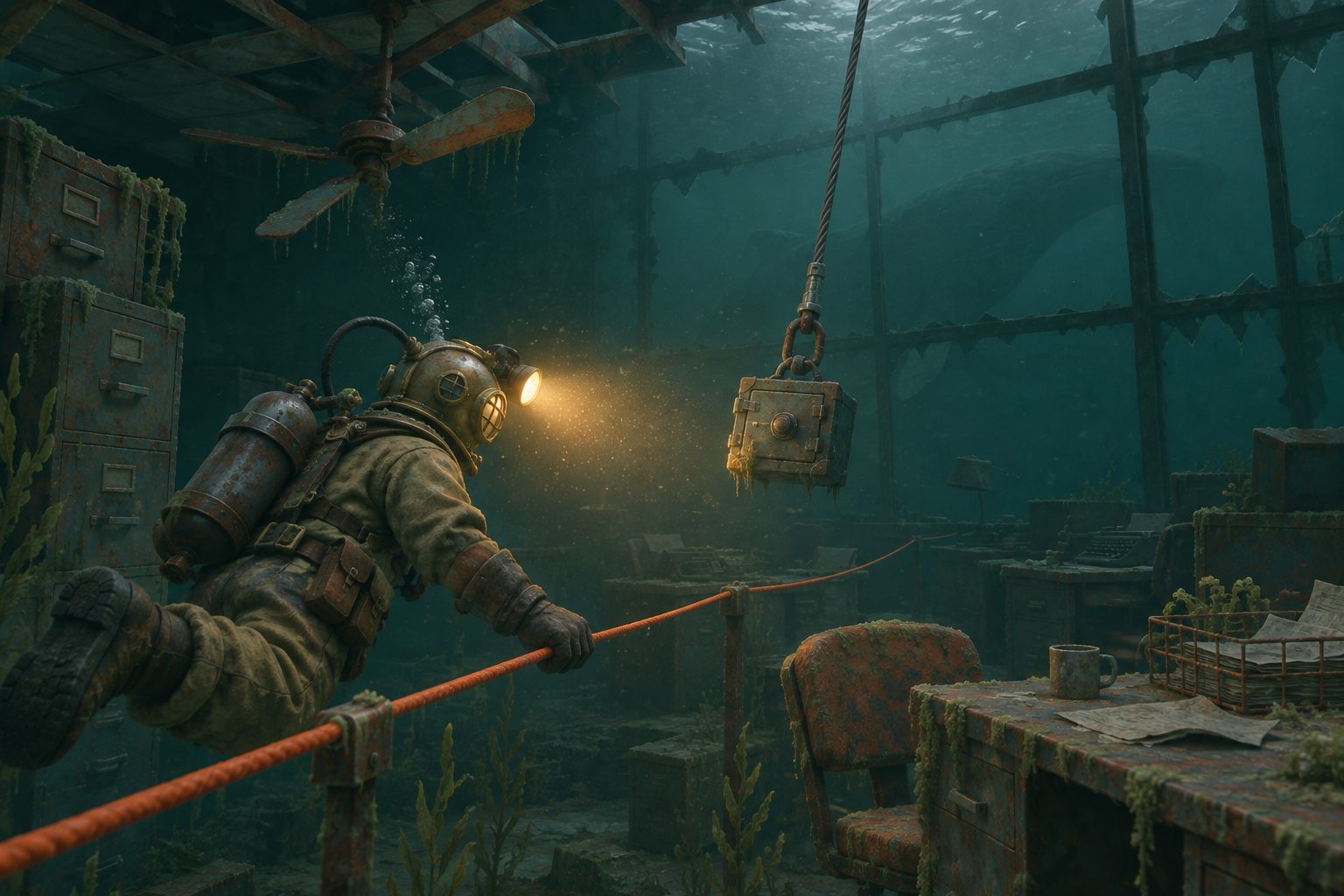
A diver deep inside a flooded office radios that their air is running low. Their lamp only lights a few metres ahead, and outside the windows something very large is moving past.
12 metres: what goes wrong
Most of the danger comes from the water, the weather and the boat itself. The creature in the deep streets is rare, and when it shows up, the right move is usually to leave.
The hardest calls are about greed: whether to stay for the safe in the bank vault while the storm builds, or go home with what you have.
18 metres: the diver's view
There is very little interface on screen. Air, depth and cargo weight show on gauges on the diver's wrist and on the boat's dashboard instead of floating markers.
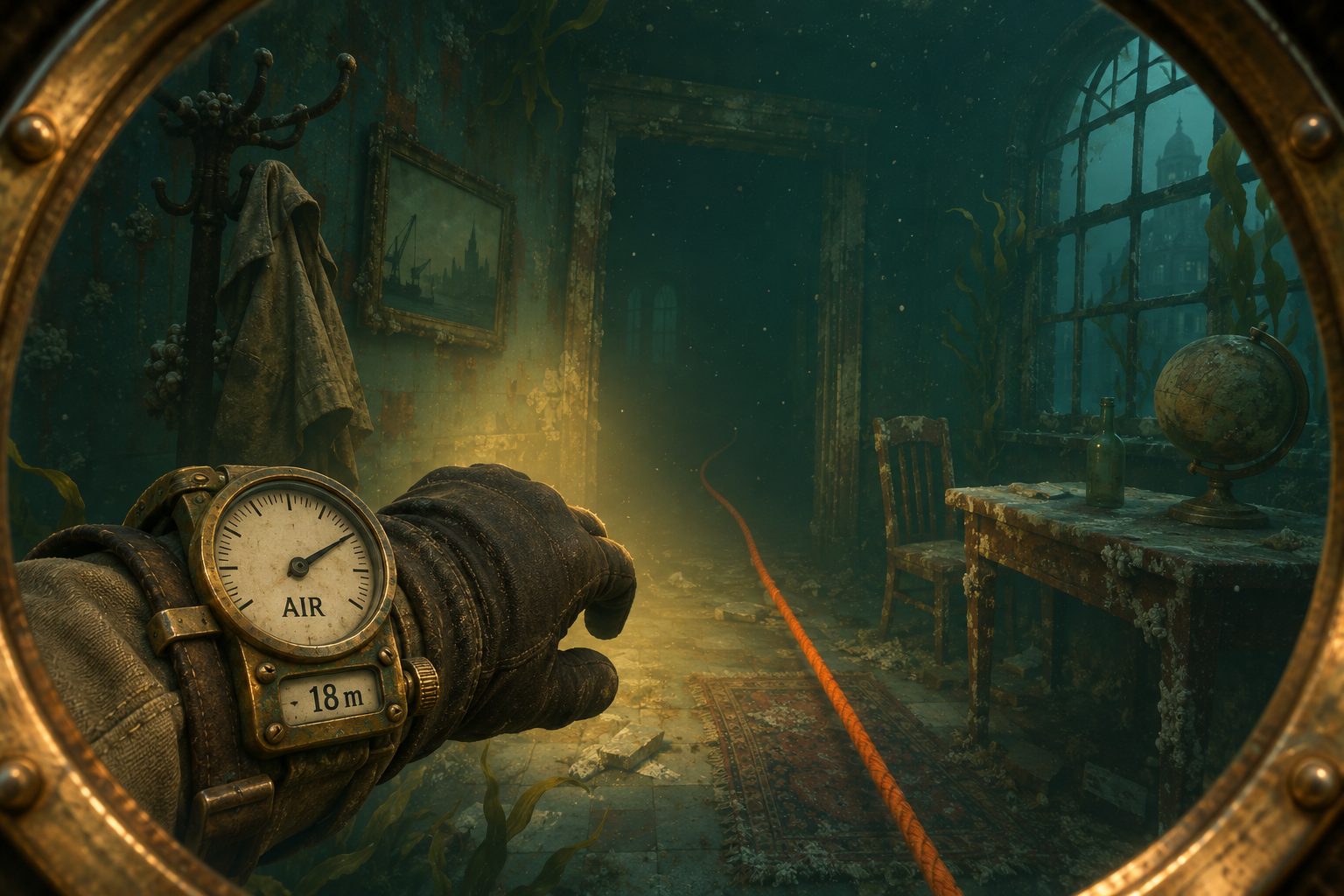
24 metres: art direction
Salvage Rights looks like a drowned city on an overcast morning: muted greens and greys above the water, murky teal below it, and warm work lights on the boat. The style is stylized realism with simple, chunky shapes. Detail goes into the tug, the crane, the diving gear and the inside of buildings, while distant rooftops and towers stay simple.
#8C949A#4F6B5A#16353A#A4552E#F2C14E#E8692CA stencil face like the lettering painted on a working hull. Use it for titles, district names and warnings.
Plain and easy to read on gauges and menus. The mono weight is for numbers on dials and the chart table.
32 metres: the deep streets
Money from salvage goes into the tug, and a better tug lets the crew reach deeper, richer and more dangerous parts of the city. Everything is earned by playing.
A stronger hull, a bigger bilge pump, a longer crane arm, better sonar, a second air compressor and a small cabin for shelter in storms. Each one answers a specific hazard.
Bigger air tanks, brighter lamps, a faster cutting torch and weighted boots for walking along deep floors.
The city opens up in rings. The crew starts in the shallow suburbs and works inward toward the old financial district, where the best salvage and the deep streets are.
Salvage includes letters, photos and logbooks that slowly explain what happened when the city flooded. Players who want the story can collect it, and players who don't can sell it.
The small harbor town grows as the crew brings back useful salvage, which opens new shops and jobs.
40 metres: the vault
Salvage Rights sells on Steam for a fixed price, with no in-game purchases.
About $20
This price is an estimate. It suits a game with a longer campaign, but it should stay low enough that a whole friend group will buy it together.